
The Geologists’ Association has produced yet another great guide, this time on the geology of Wales. However, this is a slightly different beast from most of their other publications. As is always the case with this excellent series of guides, the book describes the geology of different sites capable of being visited. However, this time, the conceit is that visiting the locations is assumed to be by car.

Back in 1994, Scottish Natural Heritage, together with the BGS, published a guidebook entitled Cairngorms: A landscape fashioned by geology. With the publication of Argyll and the Islands: A landscape fashioned by geology, it has now extended this excellent series to 20 such guides.

This book has the shape, form and feel of a holiday souvenir book – the sort you buy in tourist information shops to commemorate your visit, with pictures of the sites you didn’t have time to see. And, there is plenty of information for the curious visitor wanting to learn more about the earth science of the area. However, that isn’t the reason why I find it really interesting.

The Caithness area of Scotland is important for its geology, but is also well known for its palaeontology. The Caithness Flagstones are famous for fossil fish and the Helmsdale Fault for the Helmsdale Boulder Beds deposit, beside an active submarine fault scarp. The area even once had its own ‘gold rush’ and you can still try your luck at panning there today at Kildonan.

This is a charming little book, which describes itself as an “admittedly idiosyncratic compendium of [geological] words and phrases chosen because they are portals into larger stories”. It succeeds brilliantly at its professed goal, combining a great deal of information, education, and a gentle sense of fun, brought out very nicely by some attractive and humorous illustrations.

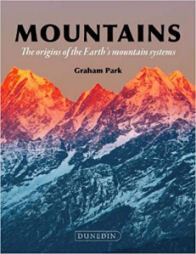
I have been lucky enough to review several books by Dunedin – the others being on palaeontology, geology and volcanology. And this is as good as the others. However, it is not an easy book to read. The illustrations are, as always, superb – colourful and clear – but this book is more suitable for the more mathematically and scientifically minded, especially those who enjoy the science of engineering.

Nowadays, people don’t do geology – they do ‘earth sciences’ – and this book is very much in that mould. That’s not to say this is a problem. Expanding the study of the world to take on a more holistic view of how things work is fascinating and, it is clear from this book, just how much man has now begun to understand and benefit from this new way of looking at geological science.

Recently, the Geologists’ Association kindly sent me three of their new guides to review, and I chose to review Alderney and La Hague: an Excursion Guide first, for some very personal reasons. I remember fondly my visits as a child to Alderney, and my extensive civil engineering works on Corblets beach, building dams of sand to capture the water flowing across the sand into the Race of Alderney.

The Scottish Borders region is famed for their frontier history, and attendant myths and ballads. This book is concerned with their more ancient geological history, which is revealed by its rocks. These indicate that the area was once on the edge of a huge ocean – the Iapetus – which met its end between the inexorable crush of tectonic plates.

Anglesey contains a fascinating variety of rock types and geological structures, best exposed in a magnificent coastline. The bedrockgeology of Anglesey comprises a complex collage of igneous, sedimentary and metamorphic rocks that were formed between 300 and 650 million years ago.

Iceland seems to set the hearts of certain geologists racing and, reading this field guide, it is abundantly clear why. Set out in this concise and authoritative book is the evidence of how this strange piece of rock – astride the Mid-Atlantic Ridge – is a “natural laboratory”, where the earth sciences can be watched in dramatic real-time.

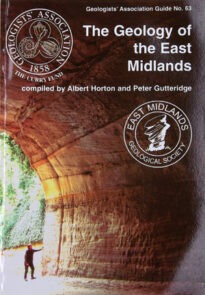
This latest publication from the British Geological Survey follows the success of its earlier publication, ‘Exploring the Landscape of Assynt’. It consists of a special pack containing both an explanatory booklet and a new 1 : 25,000 scale geological map of the Charnwood Forest and Mountsorrel area.

There are several passions in my life – geology and geomorphology being a couple and hillwalking being another. And it doesn’t take much to see that that these go together rather well. Over the last few years, a number of great leaflets, often laminated, have been produced setting out UK geological walks and these are some more good ones.

Notwithstanding the somewhat daunting use of the word “geophysics” in the title, this is another great book in Dunedin’s Introducing Earth and Environmental Sciences series of guides. In fact, that term may well discourage all but the most enthusiastic Earth Scientist.

I recently reviewed another of the guides in Crowood Press’s excellent “Landscape and Geology” guides, which was undoubtedly a great read. And this one is equally good, with great, full colour pictures, maps and diagrams, and easy to read text, with descriptions of interesting walks and what can be seen on them.That is, there are easy-to-understand explanations of how the rocks formed and how the geology affects the landscape, and there is also an n exploration of the long human story of the landscapes.