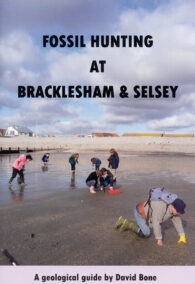

Just a couple of days before the Covid-19 lockdown, I was with friends at Tidmoor Point collecting wonderful pyrite ammonites from the Oxford Clay with this excellent guide to the South Dorset Coast. The South Dorset Coast runs from the West Fleet (of Chesil Beach fame) to and including the Isle of Portland.

Increasingly nowadays, the London Clay Formation is becoming a favourite hunting ground for fossils and several good books have been written about it. This guide, written by eminent plant palaeobotanist, Margaret Collinson was the first published by PalAss in its library of guides to (usually) UK fossils for professionals and amateurs.

It might come as a surprise to the vast majority of the UK population (and probably anyone reading this elsewhere), but this country is a great place for dinosaurs. In fact, it is one of the most important places for Lower Cretaceous dinosaurs, whose remains have been found on the Isle of Wight and in the Weald. A possible Triassic dinosaur has also been found in Morayshire, Scotland, and there are plenty more from the entire length of the Jurassic.

Dorling Kindersley is well-known for producing popular reference media for beginners and enthusiasts. Its Eyewitness Guides to fossils and rocks and minerals, for example, along with their later addition, the Eyewitness Handbook of fossils, certainly makes a useful starting point for anyone new to geology or palaeontology.

This is a lovely little book and something of a departure for Dr Dean Lomax, who, these days is more often seen up to his elbows in ichthyosaur remains. However, this fun little book is rather different. Dean (and ably helped by the artwork of Mike Love) has created a full-colour popup book covering the ancestors of many of our favourite pets.

If you, like me, spend much of your palaeontological time collecting Jurassic and Cretaceous fossil cephalopods (ammonites, belemnites, nautiluses and the), you will be delighted at the number of books being published about this fascinating group of animals.