
I have a soft spot for PalAss guides and have reviewed several in the past. As a collector myself, the amount of information about the relevant fossils is second to none, with black and white photos and descriptions of virtually everything the amateur or professional palaeontologist might need.

Increasingly nowadays, the London Clay Formation is becoming a favourite hunting ground for fossils and several good books have been written about it. This guide, written by eminent plant palaeobotanist, Margaret Collinson was the first published by PalAss in its library of guides to (usually) UK fossils for professionals and amateurs.

It might come as a surprise to the vast majority of the UK population (and probably anyone reading this elsewhere), but this country is a great place for dinosaurs. In fact, it is one of the most important places for Lower Cretaceous dinosaurs, whose remains have been found on the Isle of Wight and in the Weald. A possible Triassic dinosaur has also been found in Morayshire, Scotland, and there are plenty more from the entire length of the Jurassic.

Just a couple of days before the Covid-19 lockdown, I was with friends at Tidmoor Point collecting wonderful pyrite ammonites from the Oxford Clay with this excellent guide to the South Dorset Coast. The South Dorset Coast runs from the West Fleet (of Chesil Beach fame) to and including the Isle of Portland.

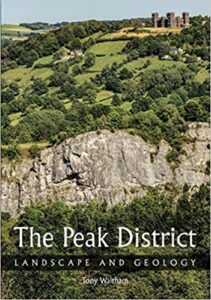
I recently reviewed another of the guides in Crowood Press’s excellent “Landscape and Geology” guides, which was undoubtedly a great read. And this one is equally good, with great, full colour pictures, maps and diagrams, and easy to read text, with descriptions of interesting walks and what can be seen on them.That is, there are easy-to-understand explanations of how the rocks formed and how the geology affects the landscape, and there is also an n exploration of the long human story of the landscapes.

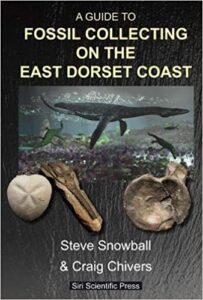
This newly published guide is another near-perfect fossil book from Siri Scientific Press, who are rapidly becoming my favourite publisher of esoteric palaeontology. This one is perhaps less arcane, as it deals with an area of Britain that has been extensively covered by various authors with varying degrees of success.