
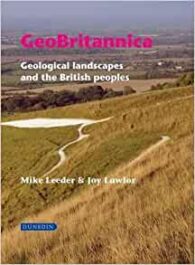
This is a very ambitious work. The authors discuss the geology of Britain as a “geological legacy”, that is, they believe it is “an inheritance bequeathed to 11 millennia or so of its post-glacial inhabitants”. Therefore, the book covers the geological foundations of its landscape and its raw materials; and how both of these have been used by society and individuals in the visual arts and literature, as well as for mining, quarrying and architecture.

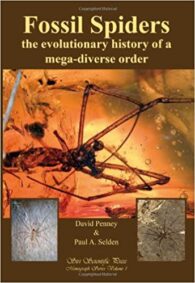
This is the first of a two-part series of monographs on spiders (and arachnids more generally) involving Dr David Penney and published by Siri Scientific Press – the other is reviewed at: Fossil Arachnids: Monograph Series Vol 2. This one is written with Dr Paul Selden, who has more than 30 years of researching, and teaching about, fossil arachnids.

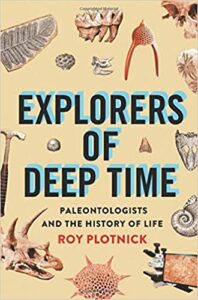
There is much to be enjoyed in this engaging book by Roy Plotnick, in which he brings the modern practice of palaeontology – and palaeontologists themselves – vividly to life.

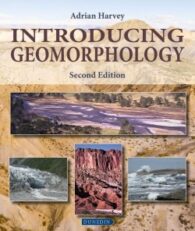
As I said in my review of the first edition of this guide, I love geomorphology. In fact, I have loved it since my school days and deeply regret not having studied it at university. However, as I said in that review, I suspect many people are discouraged by its scientific name, but all it means is the study of the earth’s landforms and the processes that create the landscapes we see today.

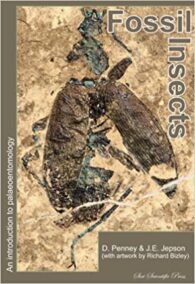
This is another of Dr David Penney’s (founder and owner of the excellent Siri Scientific Press, whose books I have frequently reviewed in this magazine) books on fossil spiders and insects. It is co-written with Dr James Jepson, whose research in Germany has involved studying fossil insects preserved in rock.

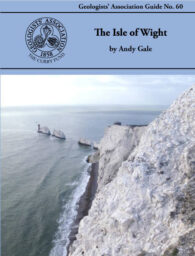
Andy Gale’s update of his guide to the Isle of Wight (this is the sixth edition) is an important change to an already excellent geological guide.

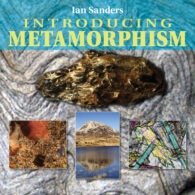
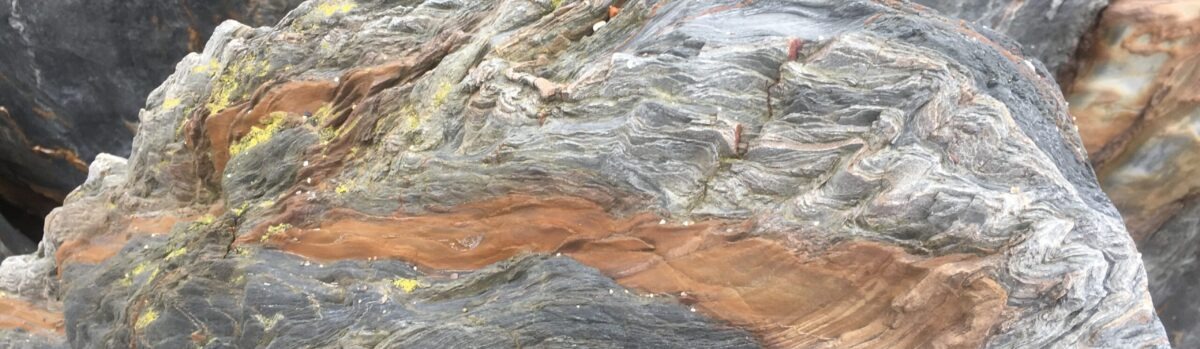
This Dunedin Academic press guide provides, at an introductory level, a succinct and readable guide to metamorphism. As readers will know, metamorphic rocks are one of the three main types of rocks.

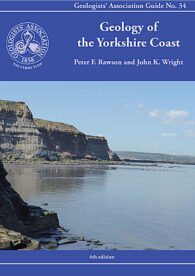
This is the much anticipated 4th edition of the GA’s Yorkshire Coast guide and it was well worth the wait. From personal experience, I was aware that the previous editions were extremely good for any geologist – professional, academic or amateur – who is attracted by the wonderful scenery and fascinating geology of this part of the UK coastline. However, this new edition is altogether an even better product.

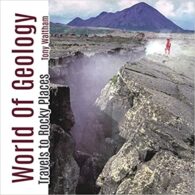
This is a lovely example of photographs used to inspire and text to explain. For many years, Dr Tony Waltham has produced a photo plus explanatory text for the back cover of the glossy magazine, Geology Today. The book represents a compilation of 110 such back covers that set out a “photographic journey” around some of the most impressive geological landscapes of the world as a result of his own travels.

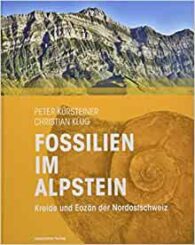
This is clearly one for our German readers, of which I am glad to say there are many. However, this glossy and excellently produced hardback, covering the fossils of the Alpstein region of Switzerland, may have general appeal to anyone interested in the identification and study of fossils from various parts of the world, despite being written in German.

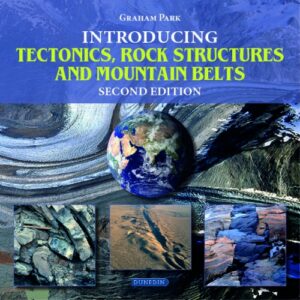
The second edition of this guide is written to explain the key concepts of tectonics and rock structures to students and to interested amateurs. I have reviewed a number of Graham Park’s books in recently years (see below) and he is clearly a prolific and excellent writer of books about the earth sciences.