
Dunedin Academic Press has once again added a title to its series of introductions to scientific subjects. This one is a short introduction to an essential subject to any budding geologist (essential, because, as the author points out, 70% of the rocks on the Earth’s service are sedimentary in origin and are of the utmost economic importance to all of us.

Nebraska has an excellent geological record, which is celebrated by some fine mosaics at the Nebraska State Capitol. When the building was being constructed, and at the request of Prof Hartley Burr Alexander of the Philosophy Department and from drawings by a colleague, the artist, Hildreth Meière, was asked to create a series of mosaics. These are now set out on the floor of the rotunda for all to see.

This is a guide to the collection, preservation and display of fossils from more than 50 locations in the UK. It is unashamedly based on the UK fossils format, but obviously, rather than being an online resource, it is a pocket sized book to be taken and read on site.

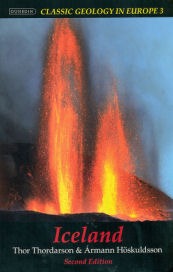
I have reviewed some excellent previous guides in this series (Iceland: Classic Geology in Europe 3), but this one is closer to home and covers an area that I have fond memories of from my Munro-bagging days. This is more a companion guide for those walking in the Highlands, especially those on geological field trips.

I remember reading and enjoying this book when the first edition came out many years ago. I am also a keen hillwalker and have stood on top of many of the Scottish mountains referred to in the text. In fact, I particularly enjoyed climbing Ben More on the island of Mull, which I remember reading was the last volcano in northwest Europe.

Almeria is a province in southeast Spain, situated in the furthest southeast part of the Iberian Peninsula. And it is a classic area for southern European and Mediterranean Neogene and Quaternary geology. In fact, it is not far north of the southern boundary of the European tectonic plate and, as a result, has been profoundly affected by the interaction of this and the African plate.

Those of you who have read a few of my book reviews will know that I love geo-guides to small geographical areas, rather than just the big geological scientific issues. In fact, there are lots of good UK guides like this one, to areas such as Dorset and Yorkshire, and many areas of Scotland and Wales, for example. And this is another excellent example of that genre.

As a former ‘Munro bagger’ and now keen geologist, this book combines two of my favourite pastimes. While the body is not quite so willing as before, the ability to read about the geology of some of my favourite Scottish walks is an absolute pleasure.

For anyone like me who finds the immensity of geological time (‘deep time’) both fascinating and fundamentally difficult – both emotionally and intellectually – this is a great book. Paul Lyle has written it for environmentalists and policy makers to help them explain their concerns and decisions more clearly in the context of geological time, but these are not the only people who should read it.

The fossil bearing rocks of the British Isles contain the remains of life from the last 2,900Ma and the UK is seen by many as the cradle of modern geology. With this is mind and using a geological map of Britain, palaeontologist Peter Doyle offers a comprehensive guide to UK fossils.

Graptolites lived in the earth’s oceans from 540 million years ago to 320 million years ago, when they became extinct. The book provides a summary of the state of knowledge relating to graptolites, and the specialists, who contribute to the book, also address the biological questions raised by these fossils, and provide pointers for further research.

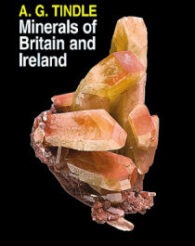
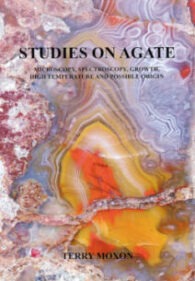
Normally, I wouldn’t be interested in semi-precious stones and other pretty things. Personally, I prefer grubbing around in the dirt, perhaps for those far more beautiful, elusive and perfectly formed Cretaceous terebratulids or Silurian trilobites. However, some semi-precious stones have the advantage of also providing a tangible link to the ancient history of life that is so fascinating.

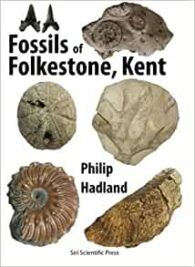
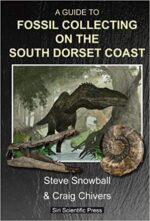
This was the first GA guide I ever bought, and I suspect it is still the best. My copy is more than well-thumbed and water-damaged, through many a happy trip to the south of England to collect, what a friend describes as “white fossils in white rock”.

This is certainly a somewhat different sort of book from those I usually review. As it makes clear, women have always played key roles in the field of vertebrate palaeontology, going back centuries. However, other than perhaps the most best known historical female vertebrate palaeontologists, comparatively little is known about these women scientists. As a result, their true contributions have probably been obscured. In this context, the book aims to reveal this hidden history, thereby celebrating the diversity and importance of women VPs.

Red Coast Revealed

The Jurassic Coast Trust has certainly producing some good books. As is well known, in recognition of its wonderful geology, the coast between Orcombe Rocks in southeast Devon and Old Harry Rocks in south Dorset was granted World Heritage status in December 2001. In this respect, these two guides cover the western and the eastern thirds of this remarkable coastline.

The island of Cyprus is a truly classic area of geology in Europe. Perhaps nowhere else on Earth does so small an area provide such an excellent illustration of the dynamics of Earth processes through abundant exposures of spectacular and diverse geology.

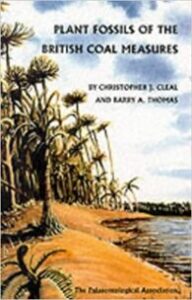
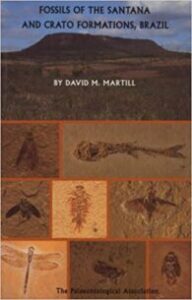
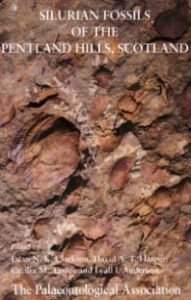
I always wait expectantly for the publication of a new Palaeontological Association guide to fossils and, when they turn up, I am never disappointed. This is undoubtedly another triumph. This guide attempts to bring the diversity of its flora and fauna together in a single work, for the first time.

As the author says, “The abundance and diversity of Foraminifera … make them uniquely useful in studies of modern marine environments and the ancient rock record”. And this book represents an interesting, enjoyable and informative ‘one-stop-shop’ treatment of precisely that subject.

I have known Neale Monks for many years. He knows his stuff and some of that stuff is ammonites. Their beautiful spiral shells make them among the most sought after. However, until this book was published in 2002, little had been published about ammonites other than in geological journals.